
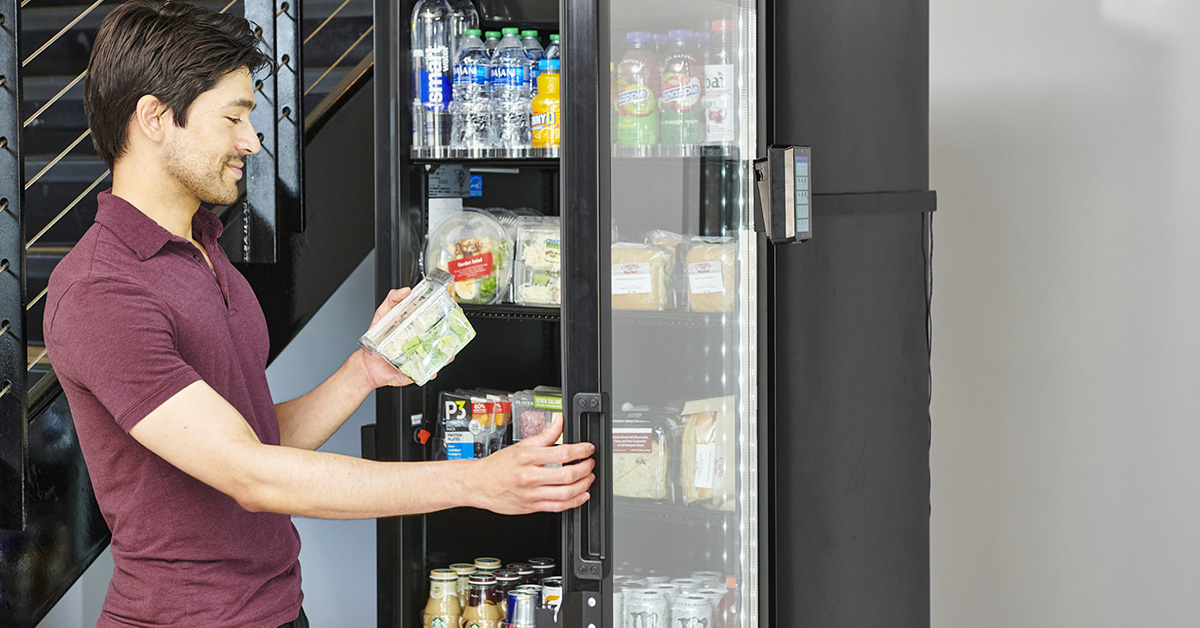
28 Jan Smart Coolers vs. Traditional Vending: What’s the Difference?
For decades, traditional vending machines have been the go-to solution for unattended snacks and beverages in offices, apartment buildings, and commercial properties. But as expectations around convenience, food quality, and technology evolve, many property managers and facilities teams are reconsidering whether vending still meets today’s needs. Enter smart coolers—a modern, tech-enabled approach that’s redefining what vending can look like. When comparing smart coolers vs. traditional vending machines, the differences in functionality, appearance, and operational value highlight why smart coolers are quickly becoming the preferred vending alternative.
Why Traditional Vending Is Being Reconsidered
Traditional vending machines have long offered simplicity and convenience, but they were designed for a different era. Today’s users expect:
- Cashless, mobile-friendly purchasing
- Fresh and varied food options
- Reliable technology with minimal downtime
- A modern, intuitive experience
At the same time, property managers are looking for modern vending solutions that are easier to manage, provide better insights, and align with upgraded spaces. This shift has fueled the rise of smart vending technology, particularly smart coolers.
 What Is a Smart Cooler?
 What Is a Smart Cooler?
A smart cooler is an unattended, refrigerated retail unit designed to provide secure, self-service access to food and beverages without traditional mechanical dispensing.
Smart coolers offer:
- Open-door access rather than product-by-product dispensing
- Frictionless checkout, typically using secure, automated item recognition
- Cashless payments, including credit cards and mobile wallets
- Refrigerated storage suitable for fresh meals, drinks, and grab-and-go items
Smart coolers are commonly used in self-service markets and micro-retail environments where freshness, flexibility, and user experience matter.
What Defines Traditional Vending Machines?
Traditional vending machines rely on mechanical systems to dispense individual products. They are familiar and widely used, but their structure creates some natural limitations.
Common characteristics include:
- Spiral, conveyor, or drop-style dispensing mechanisms
- Fixed product slots that limit item size and variety
- A focus on shelf-stable snacks and packaged beverages
- Manual restocking cycles based on schedules
While traditional vending still serves many locations, these machines can struggle to keep up with modern expectations for customization, freshness, and reliability.
Smart Coolers vs. Traditional Vending—Key Differences
When comparing smart coolers to vending machines, the contrast highlights how each solution functions differently, delivering distinct advantages for both users and property managers.
Functionality
Smart coolers offer open access to all products inside the cooler, allowing users to browse freely before making a selection. Purchases are completed through an automated, secure checkout process after the door closes, creating a smooth, frictionless experience. From an operational standpoint, smart coolers also provide real-time inventory tracking and system monitoring, giving operators and property managers greater visibility and control.
Traditional vending machines, by contrast, rely on mechanical delivery to dispense one item at a time. Product selections are fixed by individual slots, which can limit flexibility and variety. Inventory visibility is also more limited, with stock levels typically checked only during scheduled service visits rather than in real time.
Appearance and User Experience
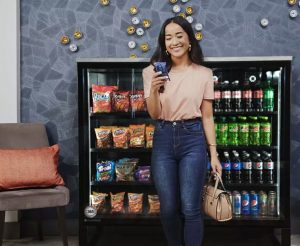
Smart coolers feature a clean, modern, retail-style design that blends naturally into updated offices, residential lobbies, and commercial spaces. Glass doors provide clear visibility into available products, allowing employees and residents to see their options at a glance. The overall experience feels intuitive and familiar, closely resembling the way people shop in a small retail setting rather than interacting with a machine.
Traditional vending machines typically have an enclosed, machine-centric design with smaller product windows that limit visibility. The experience is more transactional, requiring users to select items one at a time through buttons or keypads, which can feel less engaging. For properties focused on aesthetics and tenant satisfaction, smart coolers often feel like a better fit.
Product Variety
Smart coolers support a wide range of products, including fresh meals, salads, sandwiches, and snacks, along with beverages in various shapes and sizes. Because they are not restricted by mechanical dispensing systems, smart coolers can also accommodate healthier choices, premium offerings, and even locally sourced items, providing greater flexibility in what’s offered to users.
Traditional vending machines, on the other hand, are typically limited to packaged snacks and bottled drinks. Mechanical constraints restrict product size, shape, and variety, which can make it difficult to expand or refresh selections. This expanded variety is a key reason smart coolers are gaining traction as vending alternatives.
Operational Value for Property Managers
Smart coolers provide strong operational advantages through remote monitoring and automated alerts, allowing issues to be identified and addressed quickly. This enables faster detection and resolution of problems, which helps reduce downtime and minimize service disruptions. In addition, smart coolers offer access to detailed sales and inventory data—providing valuable insights to improve product mix, service efficiency, and overall performance.
Traditional vending machines typically rely on reactive maintenance, with issues often discovered only after a service visit or user complaint. Inventory checks are manual and periodic, and performance insights are limited, making it more difficult to proactively manage operations or optimize offerings.
Why Smart Coolers Are a Strong Vending Alternative
Smart coolers address many of the long-standing challenges associated with traditional vending, including mechanical limitations and downtime. They align more closely with modern consumer preferences while offering enhanced food quality and broader selections. From an operations perspective, smart coolers provide greater control, transparency, and efficiency. For properties evaluating modern vending solutions in Houston, smart coolers function as a true evolution of vending.
Where Smart Coolers Work Best
Smart coolers work anywhere secure, convenient, unattended access to food and beverages is needed, including:
- Office breakrooms and corporate campuses
- Apartment and multifamily lobbies
- Healthcare facilities and clinics
- Warehouses and industrial sites
- Mixed-use and commercial properties
Choosing the Right Solution for Your Property
When comparing smart coolers vs. vending machines, it’s important to evaluate how the solution will fit within your space and overall property layout. Consider who will be using the equipment—employees, residents, visitors, or a mix of all three—and how frequently it will be accessed. The desired experience also matters: are you looking to provide basic convenience, or a more elevated offering with fresh, premium options? Service expectations should factor in as well, including whether you prefer data-driven support with dynamic restocking or a more traditional, scheduled service model.
Ultimately, choosing the right solution is easier when working with an experienced provider who can help align the technology, service approach, and product mix with both your operational goals and user needs.
Why Many Properties Are Moving Beyond Traditional Vending
Smart coolers represent a shift in how people access food and beverages in shared spaces. By combining modern technology with a retail-style experience, they offer a cleaner, smarter, and more reliable alternative to traditional vending machines.
For property managers and decision-makers exploring smart coolers vs. vending machines in Houston, the takeaway is clear: smart coolers are a future-ready option for properties seeking better performance, better data, and a better experience.
Interested in exploring smart coolers as a vending alternative? Contact Elevated Retail to learn more about how modern self-service solutions can elevate your property.