
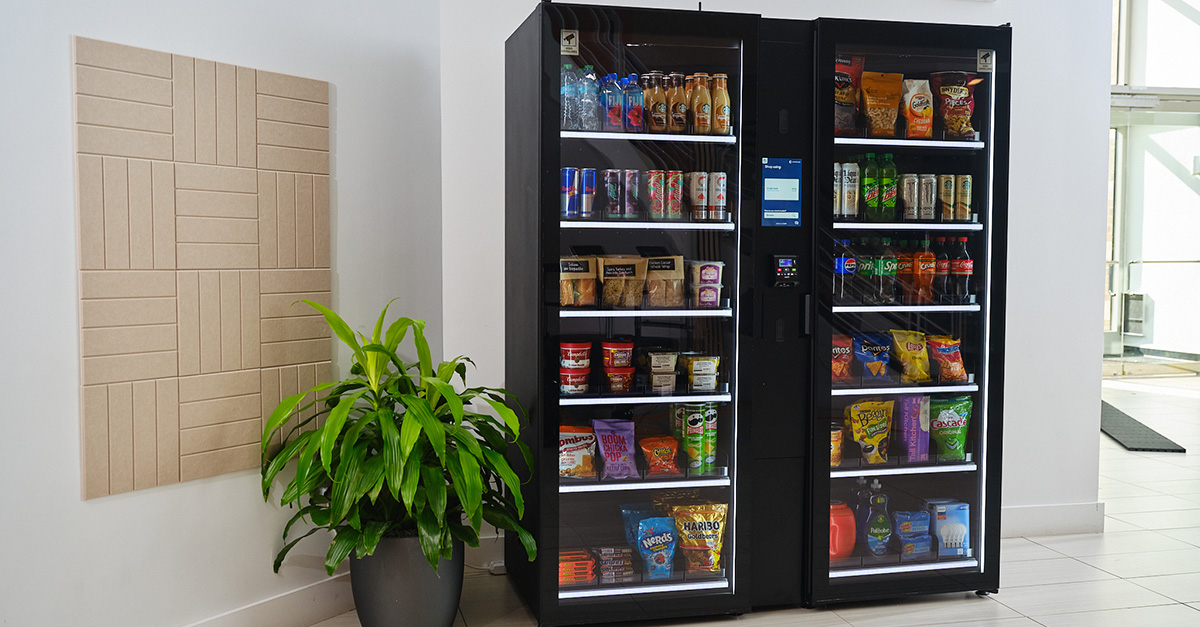
11 Feb Smart Stores FAQ: Everything You Need to Know
Quickly becoming one of the most in-demand amenities for modern properties, smart stores are self-service retail spaces that allow people to shop 24/7 using secure, cashierless technology. From apartment communities to workplaces and healthcare facilities, smart stores make it easy for people to grab snacks, beverages, and essentials without leaving the building.
If you’re a property manager or decision-maker exploring new convenience options, you probably have questions. Here are the most common questions about smart stores, how they work, and why so many properties are adopting them as a next-generation alternative to traditional vending.
What is a smart store?
A smart store is a self-service unattended retail solution that allows people to shop for food, drinks, and essentials without a cashier. It combines modern technology with an easy shopping experience, giving users access to products 24/7.
Smart stores are often placed inside apartment communities, office buildings, healthcare facilities, and industrial workplaces.
How do smart stores work?
Smart stores are designed to feel like a small convenience store inside your property. Shoppers enter the space, select items from shelves or coolers, and complete checkout using secure self-service technology. Smart stores do not require on-site staff to operate.
Features of a smart store include:
- Self-checkout with cashless payment options
- Secure access systems
- Real-time inventory tracking
How do people pay in a smart store?
Smart stores are primarily cashless. Most allow shoppers to pay using credit/debit cards and mobile payment options for fast, secure checkout.
What’s the difference between a smart store and a micro market?
Smart stores and micro markets are both self-service retail solutions, but they can differ in how the shopping experience is structured. Both options provide more variety and a better experience than traditional vending. The best fit depends on your property type, space, and the kind of user experience you want to deliver.
In general:
- Micro markets often feel like an open “mini store” with shelving, coolers, and a self-checkout kiosk.
- Smart stores offer secure access, advanced automation, and technology-driven checkout.
What’s the difference between smart stores and vending machines?
Traditional vending machines rely on mechanical dispensing and limited product space. For properties focused on convenience and satisfaction, smart stores offer a noticeable upgrade in both appearance and experience. They provide a more flexible solution, including:
- A wider product selection including fresh food and healthier options
- Modern user experience and sleek design
- Faster, more intuitive checkout
Are smart stores secure?
Yes. Smart stores are built with security in mind and are designed for shared spaces like apartment lobbies, breakrooms, and healthcare environments. For property managers, this creates peace of mind while still delivering a smooth user experience.
They include:
- Controlled entry systems
- Transaction tracking
- Technology that helps reduce shrink and improve accountability
- Inventory monitoring and alerts
Where can smart stores be installed?
Smart stores are flexible and can work in many property types. The key is choosing a location with steady foot traffic and easy access for the people who will use it most. They are commonly installed in:
- Apartment communities (lobbies, clubhouses, leasing offices)
- Office buildings (breakrooms, common areas)
- Warehouses and industrial sites (employee spaces, break areas)
- Healthcare facilities (staff areas, visitor zones)
- Mixed-use buildings (shared amenity spaces)
What products can be stocked in a smart store?
One of the biggest advantages of smart stores is the variety. They can be stocked with far more than the standard vending mix of chips and soda. This flexibility makes smart stores a better fit for modern residents and employees.
Smart stores can include:
- Cold beverages and energy drinks
- Fresh meals and grab-and-go options
- Protein snacks and healthier choices
- Breakfast items
- Household essentials
- Seasonal items and trending products
Do smart stores require on-site staff?
No. Smart stores are designed to operate without on-site staff. The technology handles checkout, tracking, and monitoring, while the service provider handles restocking and maintenance.
For property managers, this means:
- No staffing requirements
- Minimal day-to-day involvement
- A premium amenity with low operational burden
How are smart stores restocked and maintained?
Smart stores are typically maintained through a combination of scheduled service and real-time inventory tracking. This ensures popular items stay available and the store remains clean and organized. A strong smart store partner should prioritize reliability and keep the store consistently stocked.
Service includes:
- Regular restocking visits
- Inventory optimization based on usage
- Product rotation and freshness checks
- Ongoing maintenance and support
How often should a smart store be restocked?
Restocking frequency depends on usage, location, and property size. High-traffic workplaces may need more frequent service than smaller office environments.
The best smart store providers use inventory data to adjust restocking schedules, so the store stays full without overstocking.
Are smart stores a good fit for apartment communities?
Yes. Smart stores are a strong amenity for apartment communities because they offer residents convenience right where they live. Residents can grab snacks, drinks, or essentials without leaving the property. For many properties, smart stores become a daily-use feature that increases satisfaction.
Smart stores work especially well in:
- Luxury and mid-rise apartments
- Communities with busy residents
- Properties prioritizing premium amenities
- Locations where convenience and safety matter
Are smart stores a good fit for offices and warehouses?
Yes. Offices and industrial facilities benefit from smart stores because they support employee productivity and morale. When employees have reliable 24/7 access to refreshments on-site, they spend less time leaving the building for food or drinks.
Smart stores are especially valuable for:
- Distribution centers
- Manufacturing facilities
- Shift-based workplaces
- Office campuses
- Large warehouse teams
How much space does a smart store need?
Smart stores are designed to be flexible. Some can fit into small breakroom areas, while others can expand into larger spaces with shelving, coolers, and a full retail layout. A provider can typically recommend the best setup after a quick site evaluation.
The space needed depends on:
- Foot traffic
- Property type
- Desired product variety
- Whether the store is meant for residents, employees, or both
Are smart stores cashless?
Smart stores are primarily cashless, offering payment options like credit/debit cards and mobile payments. This improves speed, reduces maintenance issues, and creates a smoother checkout experience.
Cashless systems are also easier to manage and support a more modern retail experience.
Are smart stores a good alternative to traditional vending?
Yes. Smart stores are one of the strongest alternatives to traditional vending because they offer a better experience for users and better operational value for properties. For many properties, smart stores are a future-ready upgrade that matches modern expectations.
Compared to vending, smart stores provide:
- Greater variety
- Better reliability
- A cleaner, more modern look
- Support for fresh food
- Easier inventory management
Final Thoughts: Are Smart Stores Worth It?
Smart stores are changing how people access food, drinks, and essentials inside the places they live and work. They offer a modern, self-service experience that goes beyond traditional vending and aligns with today’s expectations for convenience and reliability.
For many properties, smart stores are a flexible, future-ready amenity that improves satisfaction without adding operational complexity.
Want to Explore Smart Store Options for Your Property?
Smart stores are flexible and can be designed for a wide range of spaces—from compact breakroom footprints to larger, full-service retail-style setups. The best configuration depends on your layout, foot traffic, and the people you’re serving.
Elevated Retail works with property managers and facilities teams to evaluate each location and recommend a smart store solution that fits your property’s needs.
If you’re exploring smart stores for an apartment community, office, or workplace, contact Elevated Retail to learn more.